

Explore the collection
How to play and read a pull
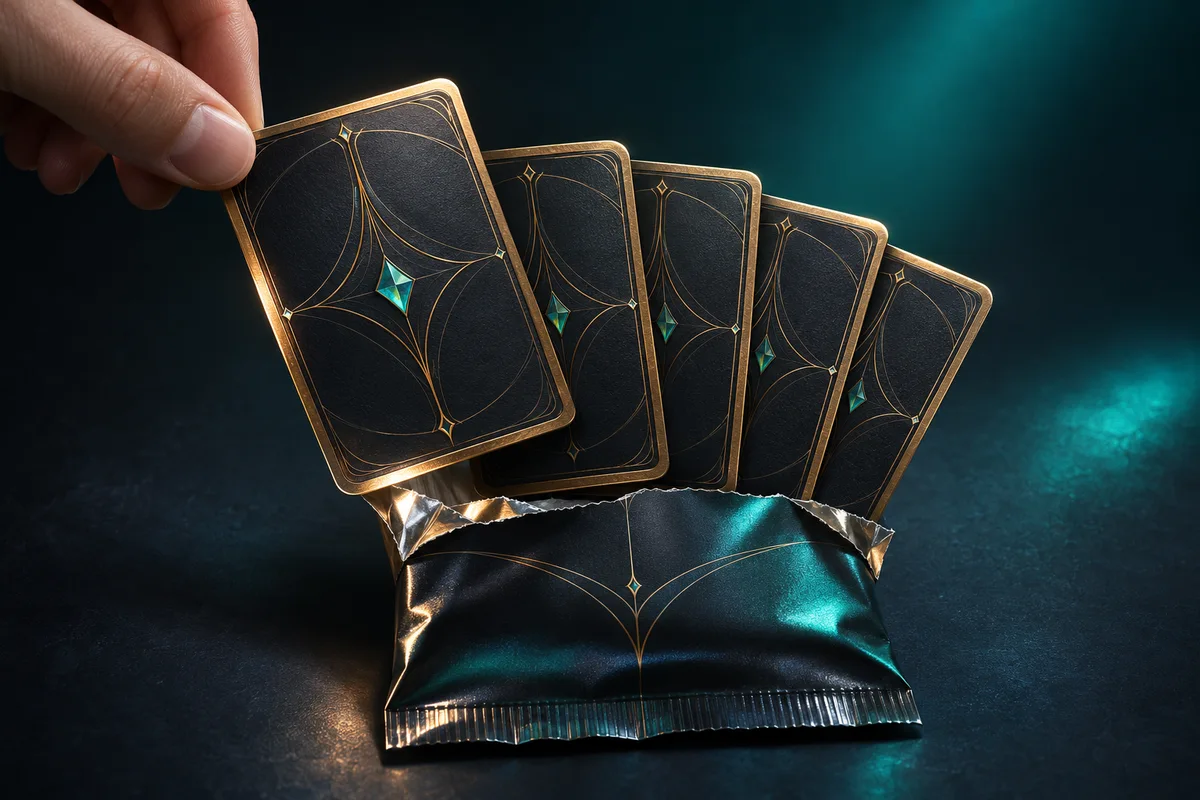
Start the arcade from the play area above and follow its opening prompts. If it offers a starter choice, read what that choice grants before taking it. The standard gacha loop is simple: open a booster, reveal the cards, and check what made it into your collection. The control that begins an opening and the control that reveals an already drawn card can do different things. Pause on the first result long enough to learn which labels describe the draw and which describe your collection.
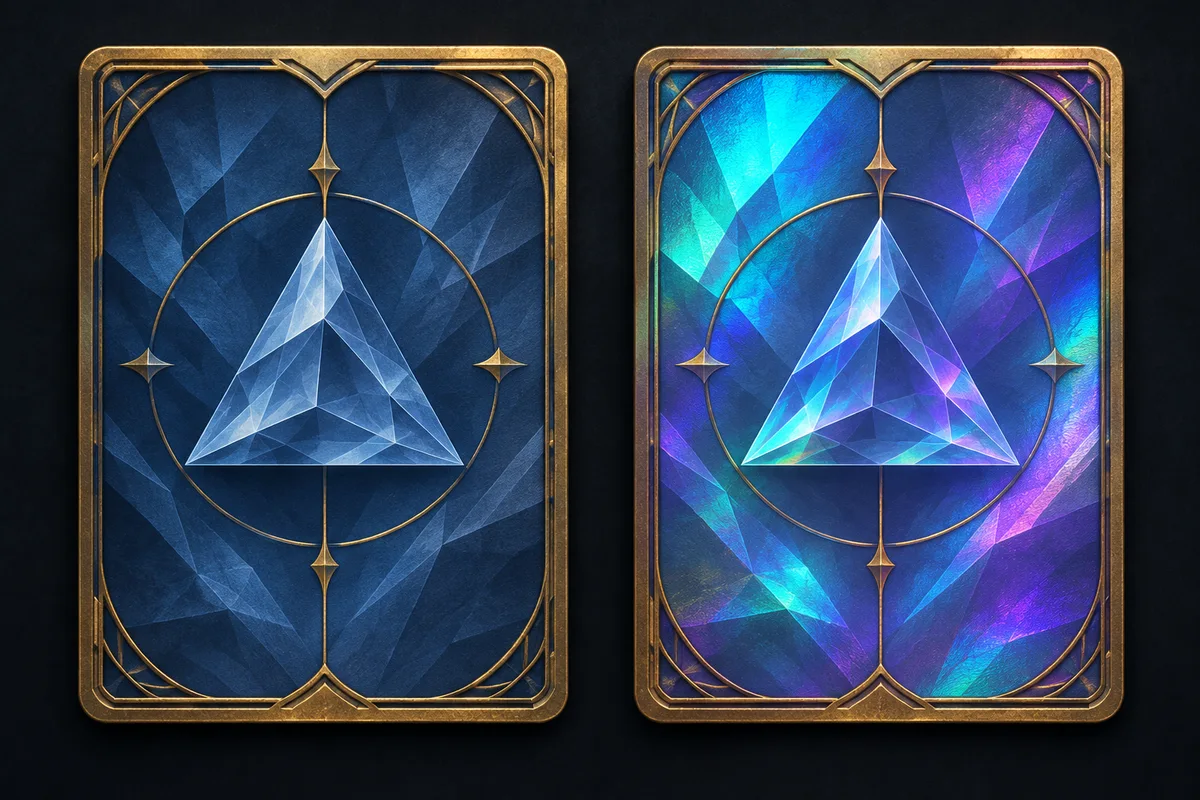
A card name tells you what you pulled. Rarity indicates its tier, foil describes its finish, and a new marker means a first discovery. A duplicate may contribute to a score or be useful for trading, depending on the gacha mode. Use a Lab practice pack to compare the two finish labels on the card page.
Rarity, individual cards, and finish
The original Extreme Demon Gacha reference uses seven ranked rarity tiers, from Common through Apex. A rarity tier groups cards, so the chance of seeing any Rare is larger than the chance of seeing a chosen Rare. The exact tier cutoffs and pools are shown in the reference table. Its publication snapshot also includes a Limited entry in the index that is absent from the standard drop table. Exclude that entry when calculating how many cards are available from those regular gacha packs.
Foil is a second property of an opening. In the reference snapshot a selected card had a ten percent chance of receiving that finish. The Lab uses eight percent and provides a finish filter. To chase the foil of a specific card, multiply its slot chance by the finish chance under that mode, then convert the result to a pack chance. A foil gacha pull keeps its underlying card identity and tier. Keep normal, foil, and either finish distinct when reading the result.
Work out the odds of a target card
Choose a card by name before you compare probabilities. Next choose the finish you want and count the packs you plan to open. A probability per slot describes one card in a gacha booster. A probability per pack answers whether at least one slot in that entire booster hits your target. A chance over one hundred packs extends the same question to the whole opening session. The three numbers can look very different even though they all describe the same target.
For independent gacha slots with target probability p, there are s opportunities per pack. The chance of missing every slot across n packs is (1 − p) raised to s times n. Subtract that result from one to get the chance of at least one hit. In the original-game reference, ten five-card packs give approximately 0.2130% for at least one GRIEF in either finish. For foil GRIEF, the same ten packs give approximately 0.0213%. These are reference results for regular pulls.
Special gacha mechanics can change the input. A bonus roll, starter choice, or a temporary focus pool can alter either the card distribution or how a booster is assembled. Pick the correct mode, read its rules, and use the custom calculator when you already have a verified per-slot number. Estimates can help plan a session, and they never change the outcome of a pull. A very small result is still meaningful, so the calculator preserves precision for rare targets.
Build a collection with a clear goal
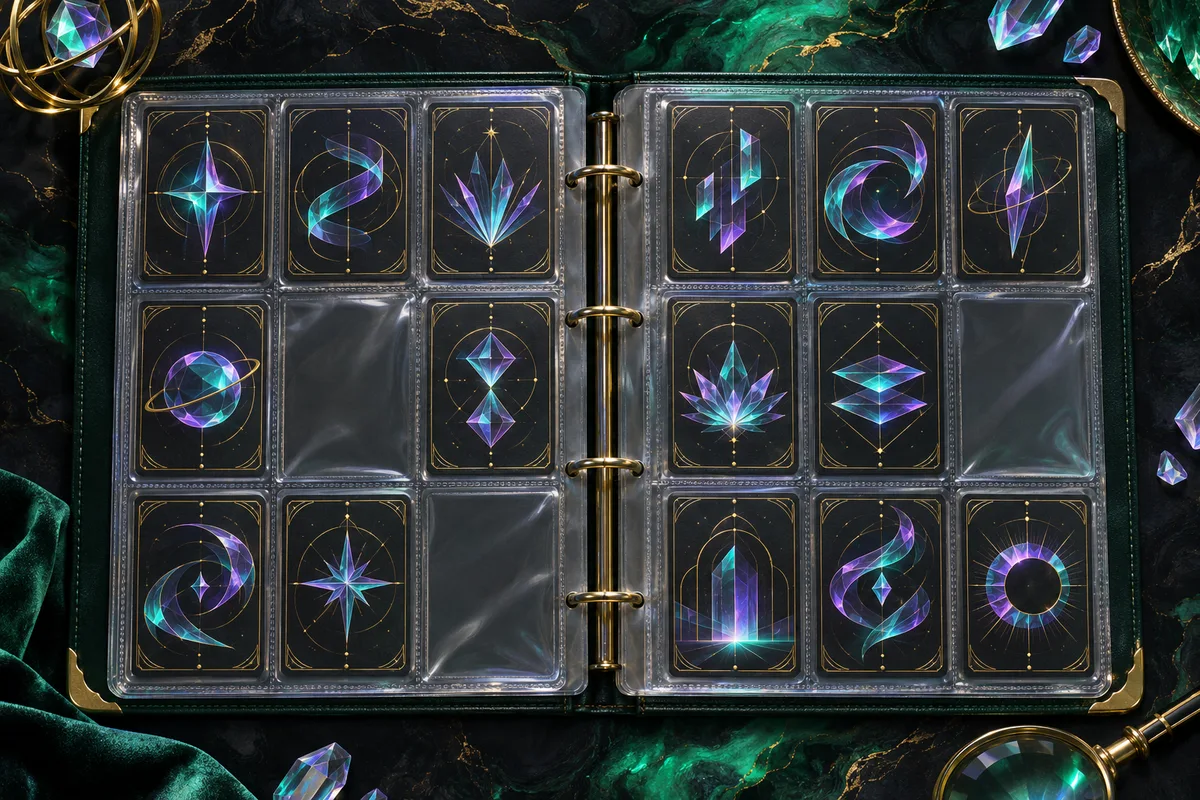
Decide what you intend to complete. A collection of distinct card names asks whether you own at least one copy of each entry. A foil checklist asks whether you own a specific finish of those entries. A score goal uses the scoring rule of the game you are playing. Tracking all three as one number makes a gacha collection hard to interpret. The Lab card index shows completion and foil completion as separate counts, and it keeps normal and foil copy counts visible in each card detail.
Use the missing filter to identify a theme with only a few gaps, then open a card to see its exact finish odds. In the Lab, a duplicate adds to the copy count. A first foil can increase the score because the collection uses the highest-scoring owned finish of each card. Arcade and original gacha scoring can follow independent rules. If you compare scores across modes, look up how duplicates and finishes are counted first. Keep a local backup before moving a Lab collection to another browser.
Read the rules for the game you opened
Demon Pack Lab puts a playable GDGacha arcade beside an independent guide. The arcade publishes an Arcade rarity column and an original-game comparison column. The independent original gacha reference used here was checked on November 23, 2026. In that snapshot the index had 1,631 entries and the public regular-pack probability table had 1,630 eligible cards, with one Limited entry outside those pulls. These counts belong to that snapshot. A refreshed list can move ranks or update rates.
The local Lab is a third gacha mode with an original forty-eight-card set, four themes, three slots per pack, and its own finish chance. You can use it to practice interpreting a card or to complete a small set at your own pace. One place to start is the Apex Prism card, which has a sample calculation in the odds guide. Keep your goal in the mode that owns your collection. A Lab card stays in the Lab library and arcade discoveries remain inside the embedded game.
For player-to-player features, check the current game screen. The reference date matters because a past guide can describe a feature whose availability has changed.
Video walkthroughs
Two community perspectives on the game.
Frequently asked questions
Can I play Extreme Demon Gacha online for free?
Yes. Open the free GDGacha arcade in the Play panel. If your browser blocks the frame, use the open-in-new-tab control in the toolbar. You can also open a free pack in the local practice collection.
How do I see a guide while I play?
Use Quick Guide beside the player. On a small screen, the same essentials open in a panel you can dismiss to return to the arcade you were using. Use the card index for individual entries and the calculator for a chosen target. The embedded arcade keeps running while the quick guide is open.
How many cards are in a pack?
The embedded GDGacha arcade advertises five cards per booster. The independent original-game reference also used five in the audited snapshot. The local Lab practice pack has three. Confirm which mode is selected in the calculator before entering a pack count, especially when comparing two results.
How rare is GRIEF?
In the original-game reference on November 23, 2026, the Apex card GRIEF was approximately 0.004265% per card slot and 0.02132% per five-card pack, counting either finish. These numbers describe that published reference snapshot. The Arcade has its own rates. Our original Apex Prism is a separate Lab card with a published practice probability.
Does opening many packs guarantee a hit?
The calculator estimates at least one hit under independent draws at fixed rates. A probability near one hundred percent can still leave a chance of missing. Check the mode before applying this calculation. Features such as a focus pool or a guaranteed starter change which calculation applies to that specific opening.
Where are my cards saved?
Cards from the Arcade belong to that embedded game. Lab practice cards are saved in this browser on this site. A different browser, private window, or device may have its own collection. Use the backup button on the Cards page to export a local Lab save, then import that file when moving between devices.